Since 1691
A building
steeped in history
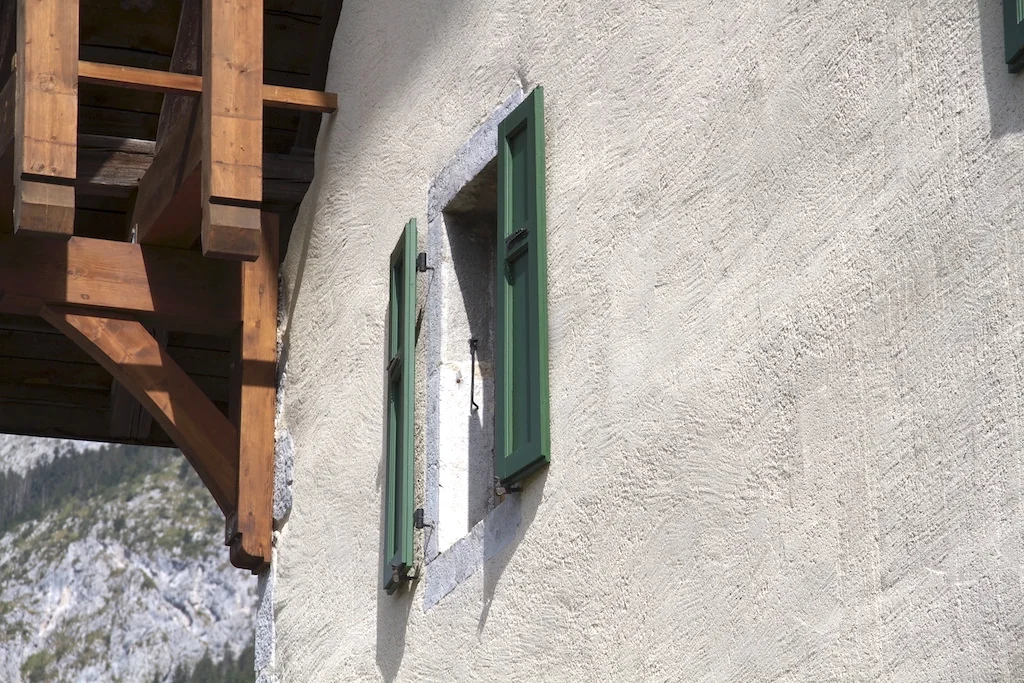
The inscription "IHS 1691" carved on the façade bears witness to three centuries of Savoyard life in the Abondance valley.
Since 1691
The inscription "IHS 1691" carved on the façade bears witness to three centuries of Savoyard life in the Abondance valley.
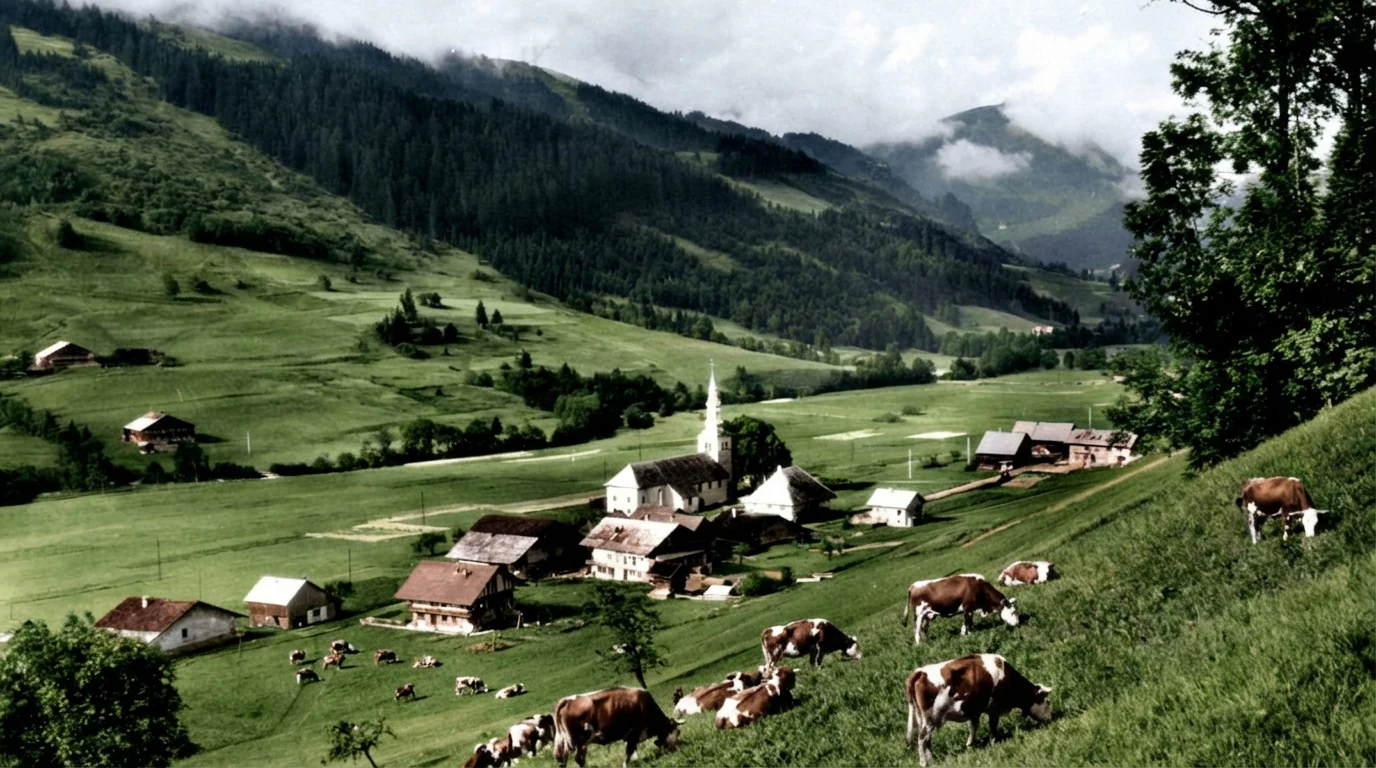
La Chapelle d'Abondance is one of the rare alpine villages to have survived the ages without losing itself. Since 1691, the date carved in the stone of our building, the valley has seen monks, Savoyard farmers and skiers from around the world pass through.
The apartment you stay in is not a recent hastily renovated construction — it is a living fragment of this history, carefully restored to preserve its soul while offering contemporary comfort.
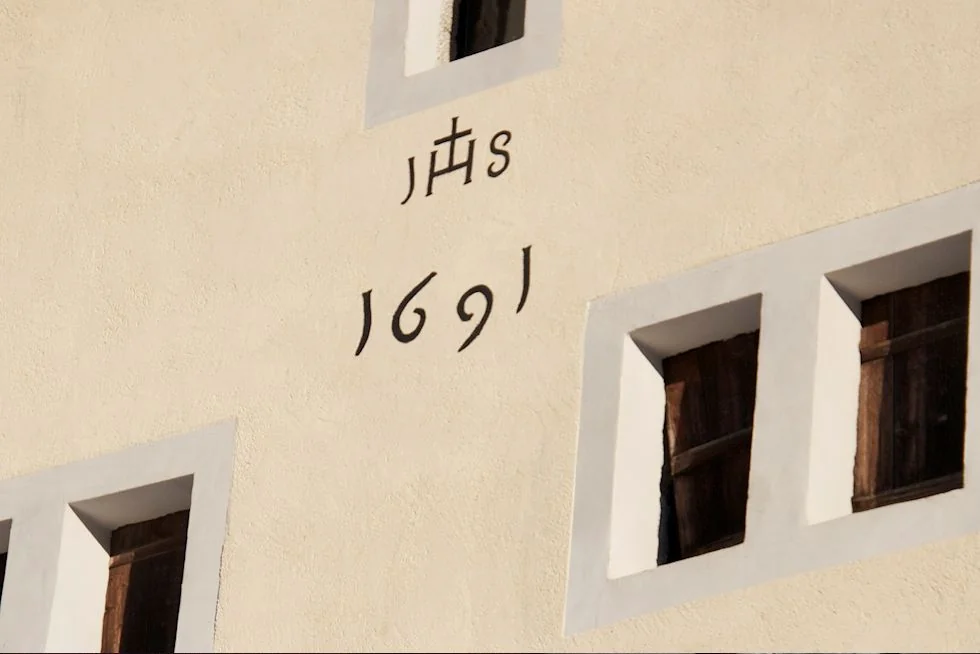
The inscription "IHS 1691" carved on the façade is much more than a date. The IHS monogram — Iesus Hominum Salvator — was carved on Savoyard buildings to place the home under divine protection, bearing witness to a deep faith and an architectural tradition unique to the valley.
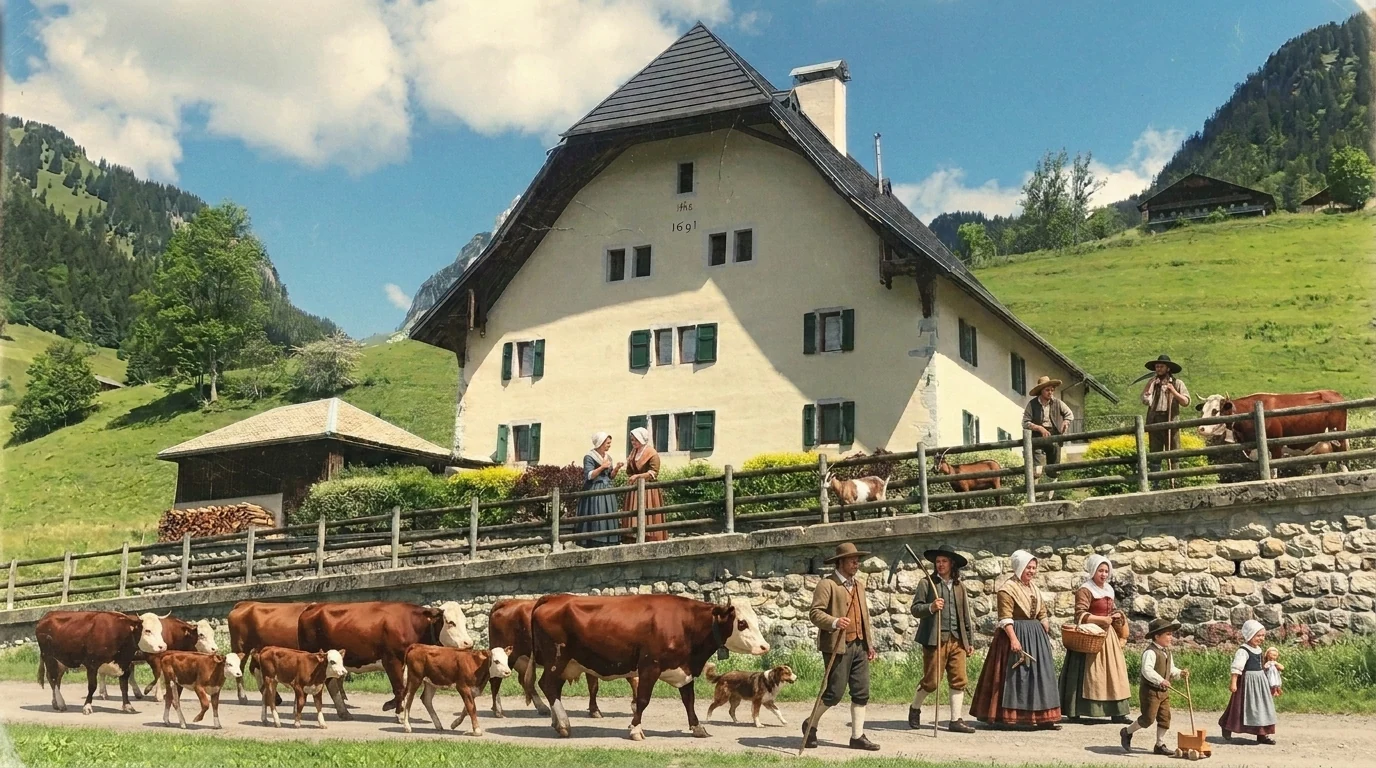
In 1691, the Abondance valley was part of the Duchy of Savoy under Victor Amadeus II. Dairy farming and cheese production were already the pillars of the local economy. The buildings of this era reflect this solidity: thick walls of local stone, massive larch frameworks, carefully oriented to capture light and protect against avalanches.
Our building has survived more than three centuries of history — the turbulence of the Revolution, the union of Savoie with France in 1860, the two world wars and the tourism transformation of the valley. Its stone walls and century-old beams carry the memory of dozens of families who have lived here.
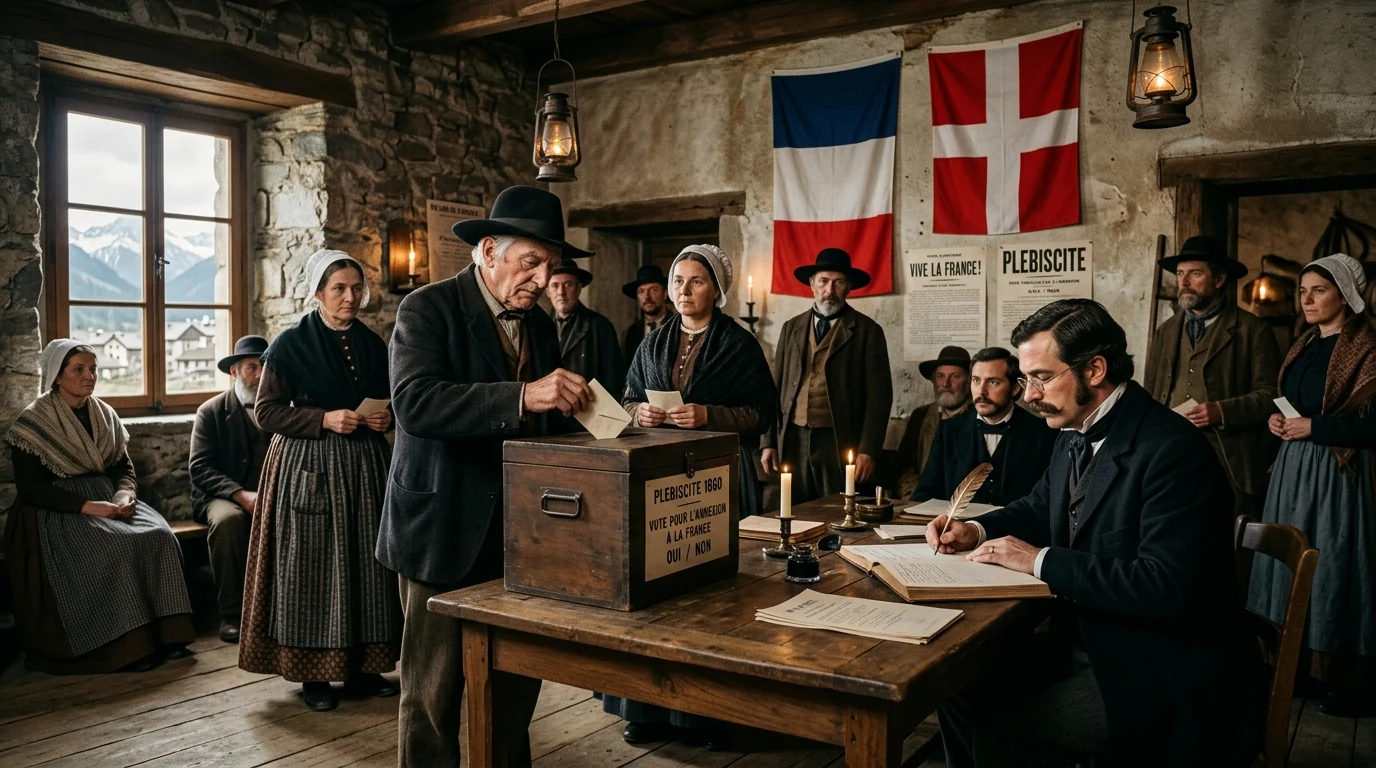
On 22 April 1860, the Savoyards were called to vote in a historic plebiscite: the union of the Duchy of Savoy with France. The result was unambiguous — 99.8% in favour. In the villages of the Abondance valley, as throughout Savoie, the news was greeted with enthusiasm.
This union ended centuries of belonging to the House of Savoy, whose duchy stretched from the Alps to the Italian Piedmont. For the valley's inhabitants, the change of sovereignty brought road construction, the opening of public schools and integration into the French economy — while preserving the Savoyard identity that remains vibrant today.
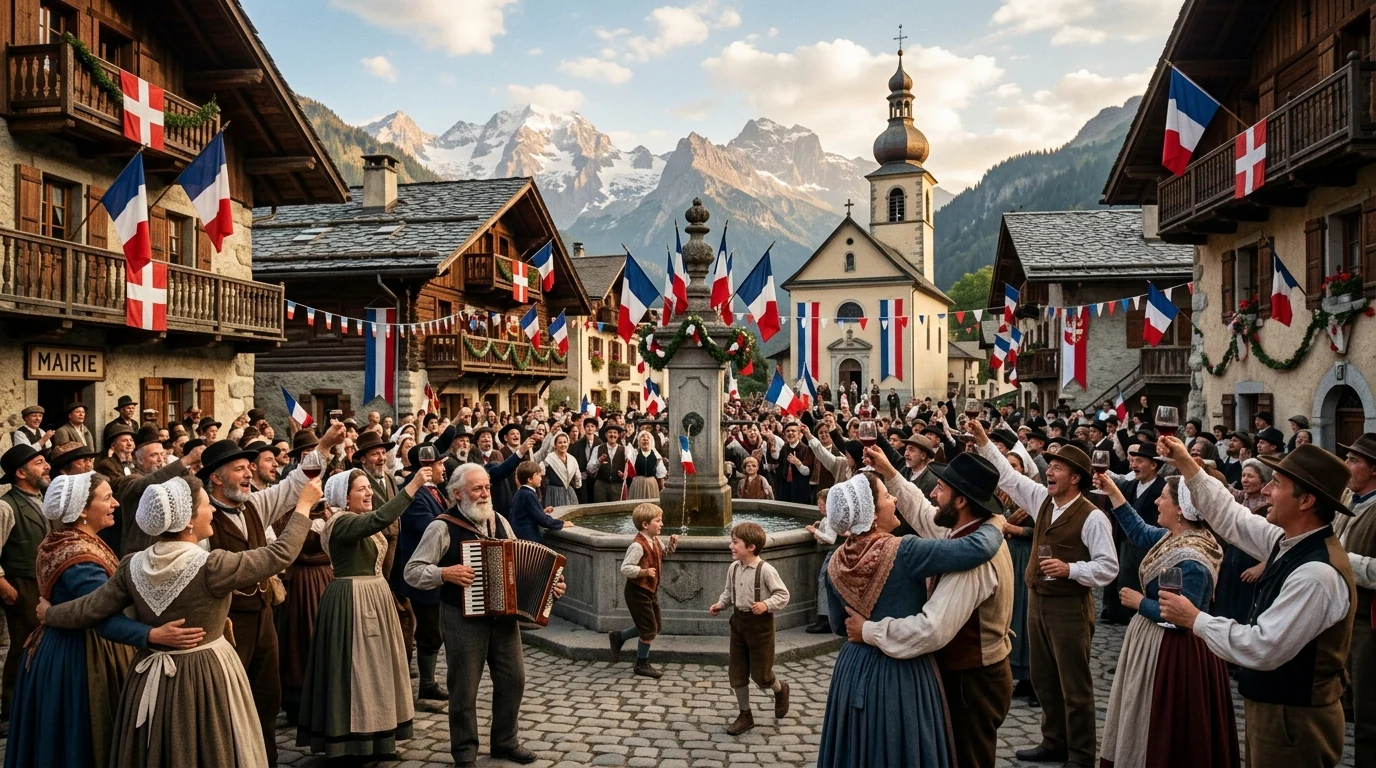
French and Savoyard flags side by side on the wooden balconies, the village fountain as a rallying point, accordion music and wine flowing: the union celebration remains a founding moment of local identity, celebrated every year.
La Chapelle d'Abondance · Since 1691
17th-century beams, aged parquet — and all modern comforts.
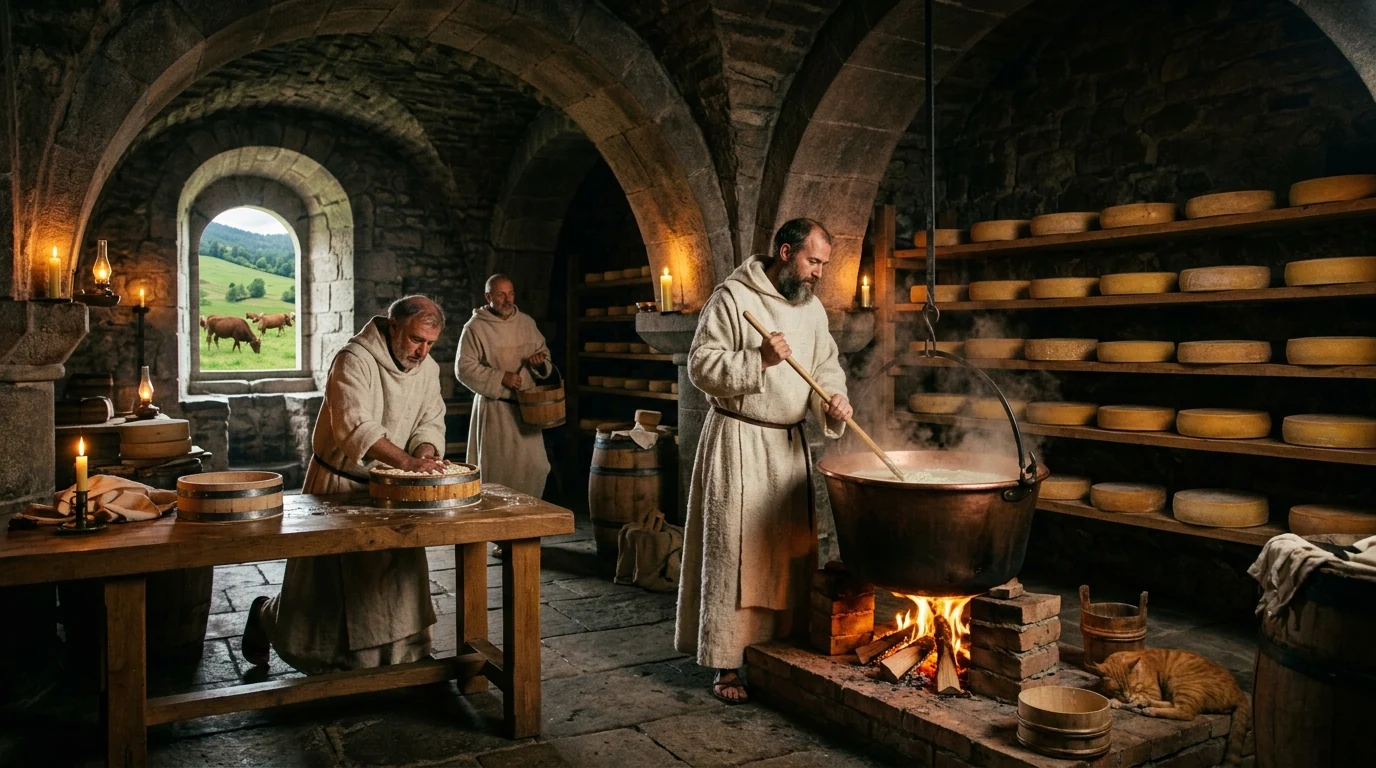
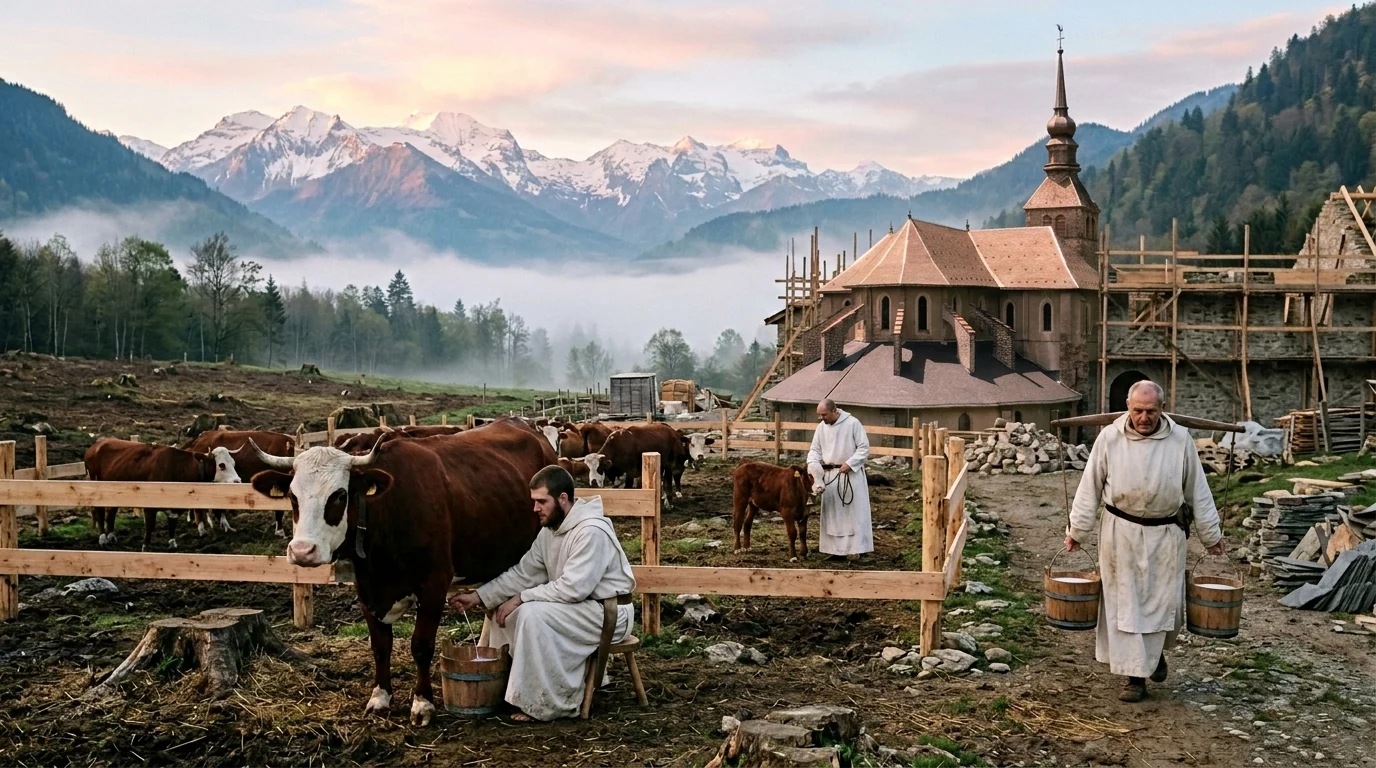
Founded in the 12th century by Augustinian canons from the Grand-Saint-Bernard, Abondance abbey quickly became one of the most important religious centres in the Northern Alps. The monks cleared the mountain pastures, developed cattle farming and invented the recipe for Abondance cheese.
The cloister, magnificently restored, is adorned with 15th-century wall paintings of exceptional quality. Among these frescoes, the Flight into Egypt is one of the first realistic depictions of an identifiable alpine landscape — one can even make out a cheese porter, proof that cheese production was already part of the visual identity of the valley.
The abbey's influence extends beyond the spiritual: the monks organise the mountain pastures into 'montagnettes' and establish transhumance rules that endure to this day. A listed Historic Monument, the abbey can be visited year-round, 5 minutes from the apartment.
The place name "La Chapelle" appears in medieval documents in the Latin forms capella and capellam. Hamlets gradually formed around chapels built in the upper valley, far from the main town of Abondance, and gradually structured themselves into distinct communities.
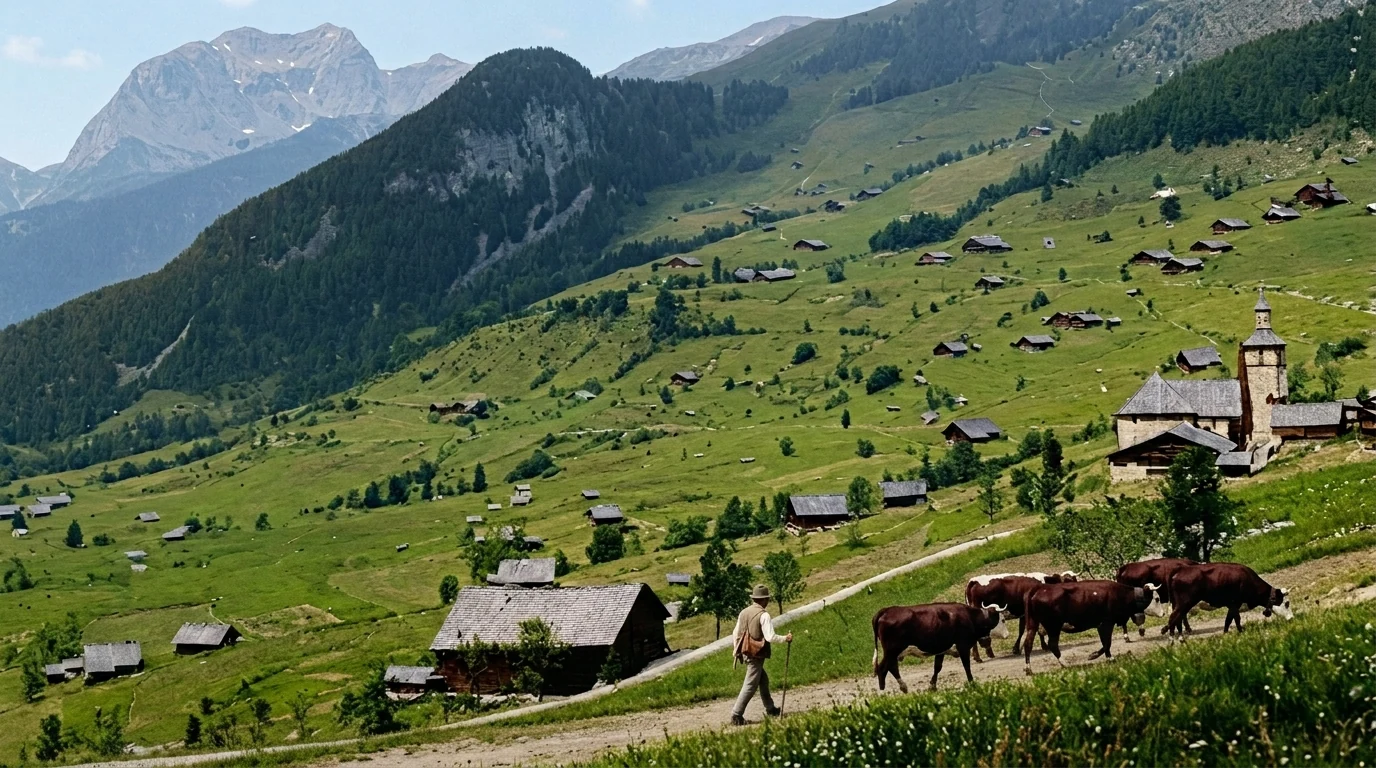
For centuries, the villages lived to the rhythm of the alpine seasons: summer transhumance to the mountain pastures, cheese-making, forestry. Life was organised around the 'fruitières', these cooperatives where each family brought their milk for collective production.
The Saint-Maurice church and its triple-bulb bell tower, typical of Savoyard baroque inherited from Austro-Italian influence, bear witness to the rootedness and prosperity of these mountain villages. The Fruitière de La Chapelle, still operating, perpetuates this centuries-old tradition.
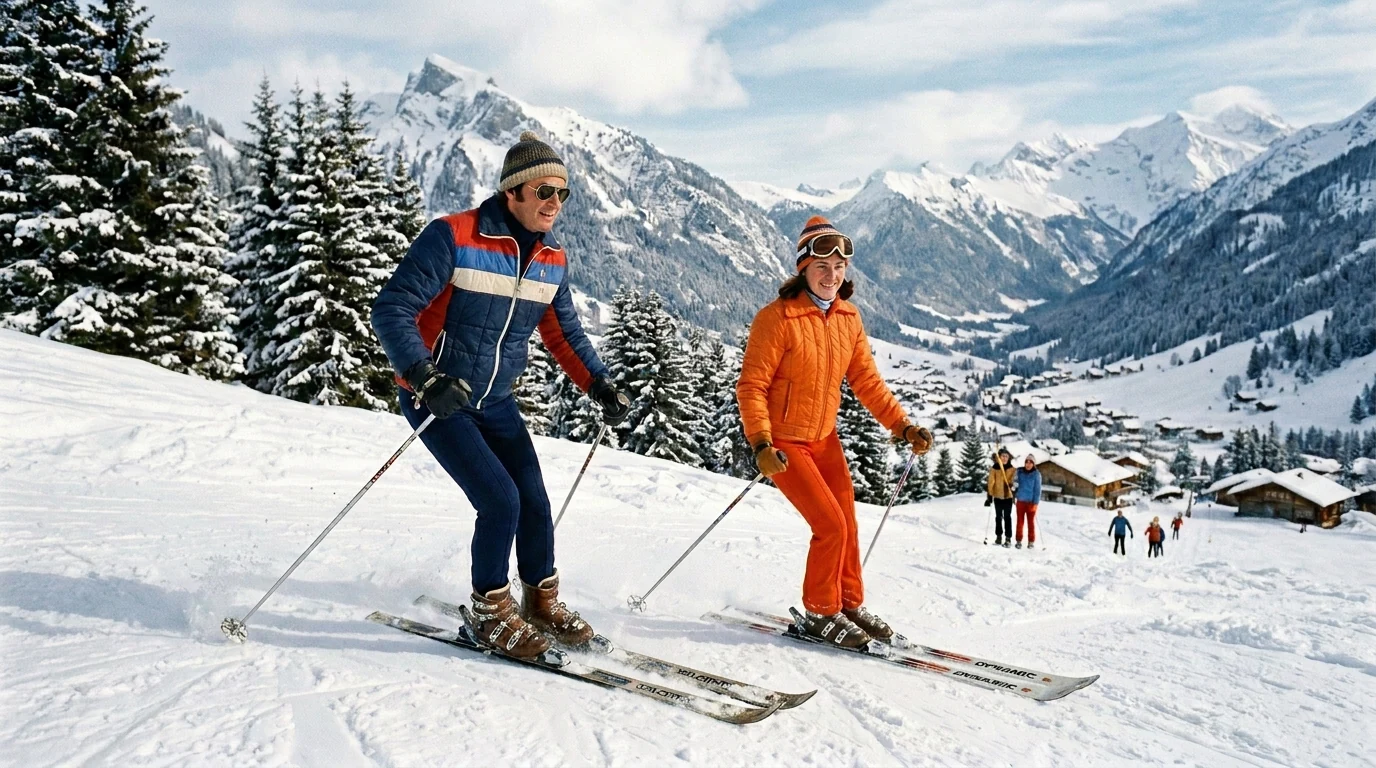
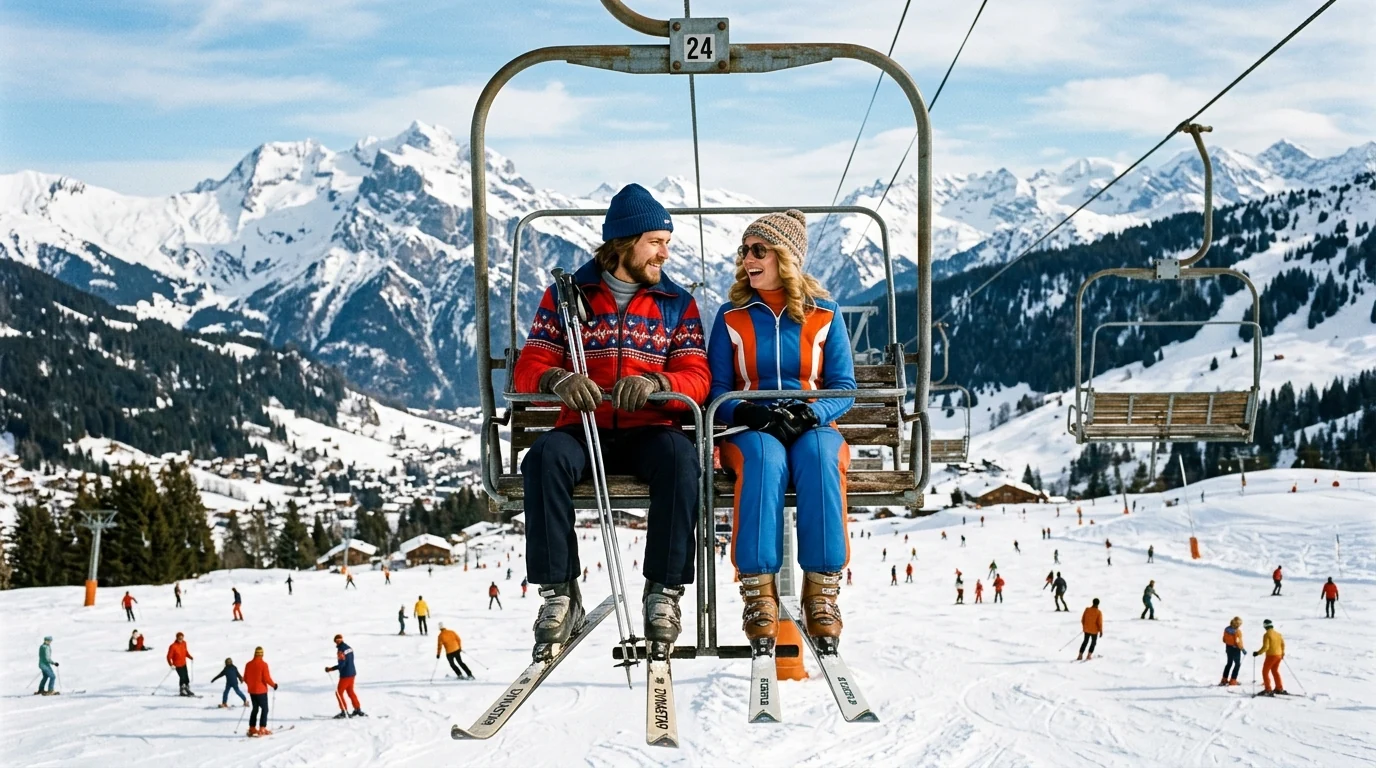
The history of the ski area begins in the 1930s with the first ski lifts at Morzine. Alpine skiing gradually became accessible throughout the Chablais valleys — Châtel, Avoriaz, Les Gets — with each village developing its own ski lifts.
The visionary idea of a cross-border ski area was born in 1964, when the Super-Châtel–Morgins link established the first ski-to-ski connection between France and Switzerland. This was a world first, demonstrating that it was possible to transcend national borders in the service of skiing.
Formalised in 1977 under the name "Les Portes du Soleil", the ski area now comprises 12 resorts, 196 ski lifts and 600 km of slopes — the largest cross-border ski area in the world. La Chapelle d'Abondance occupies a strategic position, offering direct access to both sides.
La Chapelle d'Abondance · Portes du Soleil
137 m² in the heart of a 17th-century buildinge steps from the slopes and trails. For families who demand authenticity without compromise.
"C'est toujours avec grand plaisir que nous retrouvons La Chapelle d'Abondance et ce bel appartement."
Your data is never shared
 Thank you for your message!